





An overview of the regional economy: growth with poverty
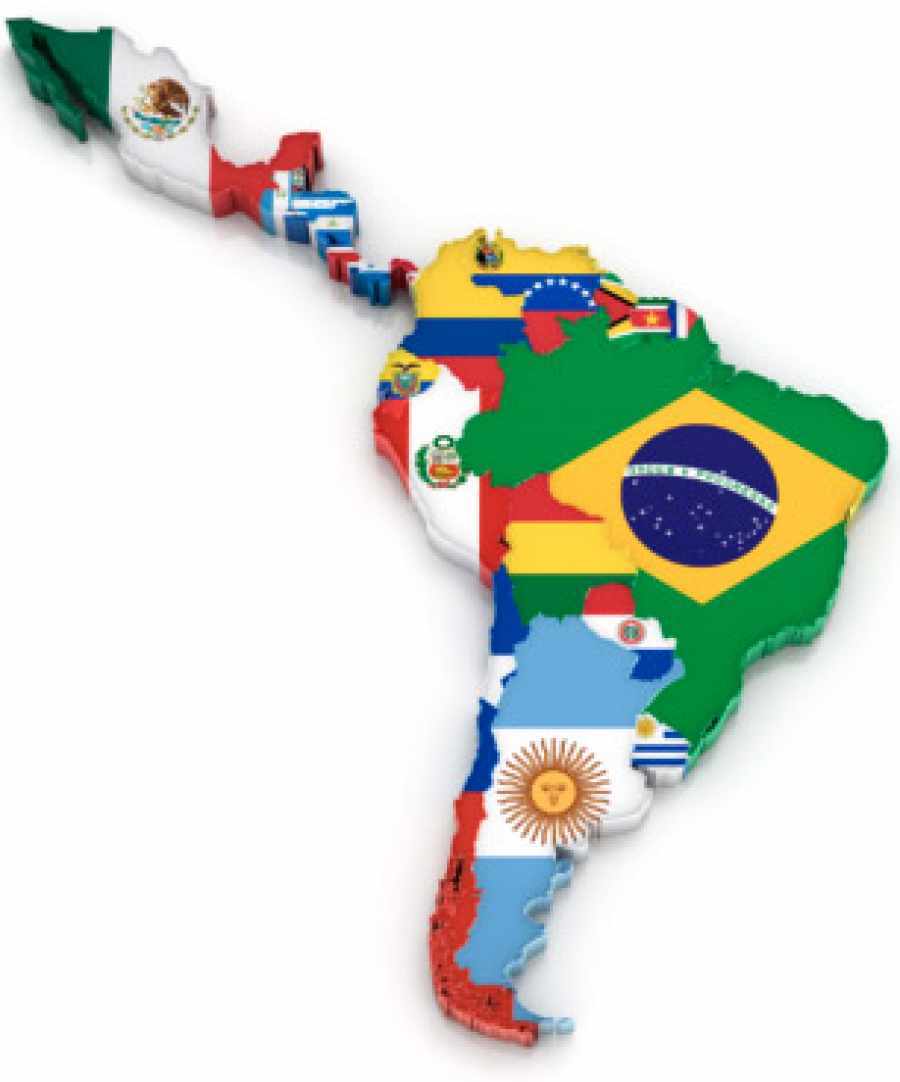
Between 2003 and 2012 Latin America has had a sustained growth of its gross domestic product (GDP), reaching up to over 5%, a rate above the recorded among emerging countries and the G7. But the slowdown in Asia over the past three years and the falling of commodity prices have already generated...
The Jubilee Foundation recognizes that the process experienced in the last decade has brought important changes.
Among these are highlighted: “The change in the classification of countries in the region where all are becoming (expect for Haiti) middle-income countries, the poor and indebted countries no longer belong to this category are now considered creditworthy, the favorable economic indicators in several countries, the achievement of the Millennium Development Goals 1, the implementation of cash transfers to vulnerable groups, the increased foreign direct investment throughout 2013 characterized by offering high returns to foreign investors but mainly in the extractive sector, the high international reserves, the access to less concessional loans, the lower flows of official development cooperation”.
However, according International Monetary Fund (IMF) estimates, despite these achievements, Latin America remains the most unequal region in the world, with a Gini coefficient of 0.56, followed by Sub-Saharan Africa, with 0.44 (a Gini of 1 means total inequality and a Gini of 0 means perfect equality).
In his turn, the Executive Director of Jubilee in Bolivia, Juan Carlos Nuñez, warns that no stabilization funds were created to invest in other productive sectors that generate more jobs and greater sustainability.
Currently, the region’s new economic situation is evident in the data provided by the Economic Commission for Latin America and the Caribbean (ECLAC): in 2014 foreign direct investment fell by 16%, that same year the regional GDP fell by 0.5%, and it is expected that this year the economy will continue to contract by 0.6%.
Commodity crisis
Though current oil prices, now around $45, are not as low as in 2000-2004, they are much lower compared to the boom period from 2010 to 2014 (when oil price rose above $100), and the medium term tendency is for prices to remain low.
In the mining sector, low prices also create problems, but perhaps one of the main issues relate to gold, which has become the main mining export in the region.
“Unfortunately, US, Chinese, Arab Emirate and Swiss companies have corrupted the business, pushing for illegal local production increases. What is illegal does not preserve the environment nor does it pay royalties or taxes”, warns Jubilee Foundation.
Various experts estimate that at least the same amount that is recoded in official statistics leaves producing countries irregularly.
Social achivements in risk
Jubilee warns that the crisis may affect particularly the most vulnerable populations in the region because it can damage the sustainability of the social policies implemented in the last decade.
Though social spending has continued to grow, it has done so at a diminishing pace. It represented a 19.5% of regional GDP in 2013-2014, but now international agencies estimate a possible stagnation of social spending because of the short-term economic projections, which raises the concern that the most vulnerable populations could fall back into poverty and destitution.
According to ECLAC’s report titled Social Panorama of Latin America, in 2014 the regional poverty average rate stood at 28.2% and the indigence rate reached 11.8% of the total population, whereby both maintained their level with regard to 2013.
In the year 2014, the number of poor people increased, reaching 168 million, of which 20 million were destitute or living in extreme poverty. The report also projects an increase in 2015 of both the poverty rate and the indigence rate, by which 175 million people would find themselves living in income poverty, about 75 million of them living in extreme poverty.
Regional Challenges
Nuñez believes that to cope with the commodity crisis, and in the light of the rising of new centers of power, such as the Asian market, “it is important that the Latin American region address integration processes in order to establish a greater bargaining relationship. Economic diversification also consists of identifying markets, both internal (regional) and external, which can reduce asymmetries among countries in the region”.
However, the realization of regional integration processes appears to have stalled, in a new context where internal conflicts are increasing due to transparency and corruption problems that, as seen recently in Brazil, trigger institutional crises that may even affect the geopolitical situation in the region.
In this context, Jubilee warns that, “what we now have are complex scenarios of credibility and legitimacy; lack of development strategies, corruption levels even among the social organizations, dependence on state bodies that have increased impunity, are all leading to a political and social crisis, jeopardizing the achieved social progress”.
LEA ESTA NOTA EN ESPAÑOL AQUÍ
Hay crecimiento con pobreza de la economía latinoamericana

 Acceder


