





Clinton or Trump: Which is the best option for Latin America?
“International finance capital is working with Hilary Clinton and other U.S. political elites to reassert the Washington Consensus in Latin America”, affirms Eric Draitser, an independent geopolitical analyst based in New York.
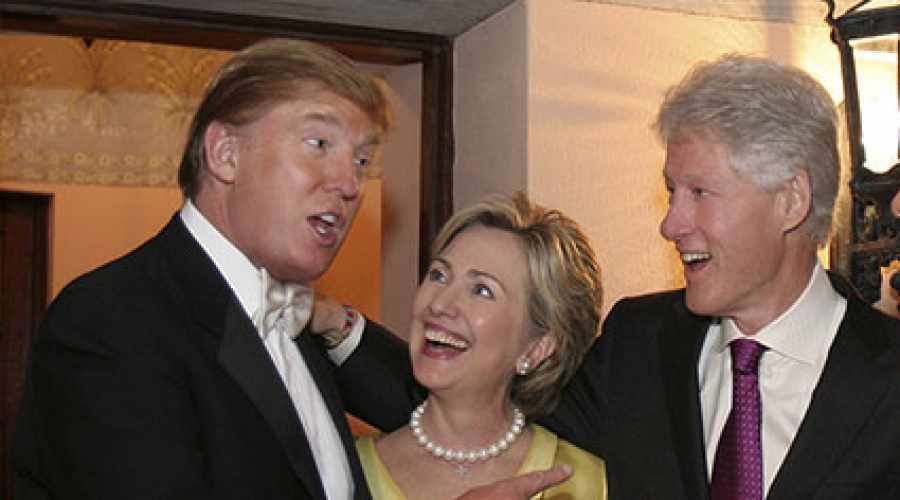
Clinton’s proximity to Wall Street is evident: to name a few examples, she has received $275.000 from Golden Tree Asset Management for delivering a conference speech, as well as $675.000 for three speeches she made to Goldman Sachs.
According to the New York Times, this dynamic has allowed Clinton to accumulate more than $2 million dollars from Wall Street bankers in less than seven months; since 2014 these benefits amount to $25 million. If one adds the perceived sums since 2001, the total amount received by the Clintons from these financial circuits has reached $125 million.
Based on these facts and background, Draitser argues the Hillary Clinton is “the main representative of Wall Street in the US presidential race”.
Wall Street in current South American politics
Jorge Paulo Lemann is one the richest men in Brazil: he owns Heinz Ketchup and Burger King, is the majority stockholder of Angheuser-Busch and Budweiser and is closely associated with Warren Buffet.
According to Draitser, Lemann has financially supported groups that participated in the street demonstrations calling for the ouster of Dilma Rousseff, including the very “conspicuous” VemPraRua (Come to the Streets).
Other important protest groups have also been directly funded by different Wall Street interests, “in particular (by) the infamous Koch Brothers”, he adds.
Charles and David Knoch (oil tycoons and, among other things, financiers of climate change “skepticism”,) are -claims the expert- the key financiers behind the Movement for a Free Brazil (MBL) and Students for Freedom (EPL), via the Atlas Economic Research Foundation and the Atlas Leadership Academy, from which have emerged the most key leaders of the anti-Workers Party protests.
Wall Street’s influence also extends into the Brazilian Congress. In April, the day after the presidential impeachment vote was taken, “Senator Aloysio Nunes was in Washington for high level meetings with Republican Senator Bob Corker (chairman and high ranking member of the Senate Foreign Relations Committee) and with Democratic Senator Ben Cardin, a strong Hillary Clinton supporter”.
In the case of Argentina, one merely has to look at the government’s economic team to notice the presence of Wall Street and major oil corporation representatives, among others.
The Ministry of Economy is held by Alfonso Prat-Gay, a longtime Wall Street banker, neoliberal ideologue, and former president of Argentina’s Central Bank (ACB). Francisco Cabrera (formerly a banking giant HSBC and other financial institutions) took over as Industry Minister, while another neoliberal ideologue, Federico Struzenegger currently stands as president of ACB.
In addition, the new Energy Minister, Juan Jose Aranguren, is the former president of the Argentinian subsidiary of the oil giant Shell. The picture is completed by the granting of Macri to pay a multimillionaire illegitimate debt to the Vulture Funds.
What effect could Trump have in Latin America?
A key part of current US international economic policy are the controversial Trans-Pacific Partnership (TPP) and the Trans-Atlantic Trade and Investment Partnership (TTIP). Macri has come out in favor of such kind of agreements, and most likely a post-Rousseff government in Brazil also will, as it is the case of the most conservative governments in the region (Chile, Peru and Colombia).
As Secretary of State, Clinton was a major advocate of TPP and in 2012 she went on to say that the TPP “sets the gold standard in trade agreements”, though now tries to appear as opposing the treaty. By contrast, Trump always seemed to be against the TPP.
Perhaps that is why Charles Knoch – one of the Koch Brothers- recently admitted that, faced with Donald Trump the presumptive Republican nominee, he could support Hillary Clinton, who therefore emerges as Wall Street’s favorite.
On the other hand, while Clinton’s conservatism and power would maintain the current state of affairs (interventionist foreign policy), it is possible that Trump’s apparent absence of foreign policy tends to leave Latin American politics in the hands of Latin Americans.
And even though the Republican pre-candidate is “the expression of a blind, arrogant far right” –as expressed by respected academic and Mexican historian Enrique Krauze-, it is possible that a triumph of Trump, in practical terms, could be positive for Latin America, although it would be very bad for U.S. and those who live there.
As was stated by president Rafael Correa in an interesting analysis for an Ecuadorian media outlet a couple of months ago, “When a guy like that (Trump) arrives in the scene, I think it would be very bad for the United States. But Latin America is already quite independent, so because of his message, even for the progressive trends in Latin America, his possible arrival to power could be positive. His speech is so clumsy, so basic, that it would arouse strong reactions from Latin America”.
LEA LA NOTA EN ESPAÑOL EN EL SIGUIENTE ENLACE
Clinton o Trump ¿Cuál de los 2 conviene más a Latinoamérica?

 Acceder


